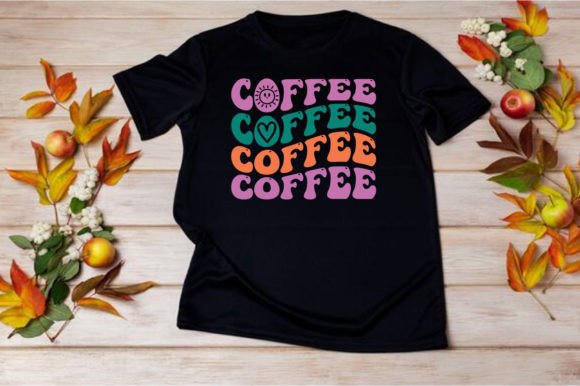
COFFEE SVG, VECTOR
A Designer’s First Look: Warm, Simple, and Ready for Real Threads
When I opened COFFEE SVG, VECTOR for the first time, my instinct wasn’t to zoom in on technical specs—it was to imagine it stitched onto a soft, heavyweight cotton tote bag for a local café pop-up. That’s how design evaluation starts for me: not with pixels, but with purpose. This isn’t a busy, illustrative coffee scene. It’s clean, confident, and quietly expressive—think minimalist mug silhouette with subtle steam swirl, balanced negative space, and a gentle curve that echoes the warmth of the ritual itself. It doesn’t shout “coffee!”—it invites recognition. That makes it unusually versatile for embroidery: it reads clearly at 3 inches wide on a sleeve or scales gracefully to 6 inches across a sweatshirt chest.
Where It Shines: From Boutique Merch to Personalized Gifts
I tested COFFEE SVG, VECTOR across several real-world applications—and its strength lies in consistency. On a midweight unbrushed cotton sweatshirt? Crisp satin stitch edges held beautifully. As a small embroidered patch on a denim apron? The shape remained legible without over-stuffing the hoop. For baby embroidery—say, on a gauzy muslin tea towel—it worked best when simplified slightly (a quick vector edit to widen the steam line), proving this design rewards thoughtful adaptation, not just drop-in use.
It’s especially effective for small shop products where handmade presentation matters: think Etsy listings for custom embroidered mugs (via heat-transfer vinyl prep), nursery decor pillows, or holiday gift sets pairing a monogrammed sweater with a matching coffee-themed tea towel. As a tote bag design, it lands perfectly—neither too literal nor too abstract. Customers notice it, remember it, and associate it with care—not clutter.
Where to Pause: Texture, Scale, and Fabric Reality
Like any strong machine embroidery design, COFFEE SVG, VECTOR performs best when matched to context—not forced into every scenario. On highly textured fabrics like terry cloth or thick fleece, fine details (like the tip of the steam curl) can blur unless you adjust stitch density or add light topping stabilizer. On stretchy fabric—say, a performance-blend tank top—I’d recommend testing with basting stitches first, then using cutaway + tear-away combo stabilizer to prevent puckering around curves.
Dark fabric demands attention too: that clean silhouette works powerfully in white thread, but if you’re planning black-on-black or navy-on-navy, confirm contrast holds in your mockup. And while it’s labeled for T-Shirt Designs, keep in mind that lightweight tees often need reduced fill stitch density to avoid stiffness—especially near seams or curved areas like side panels. For caps or curved surfaces, test placement early: the bottom curve of the mug base needs to sit comfortably above the bill seam, not straddle it.
Design Assets That Build Trust—Not Just Aesthetics
What separates COFFEE SVG, VECTOR from generic clipart is how it supports professionalism in finished product. When used on boutique merchandise—say, a set of embroidered kitchen towels sold as wedding gifts—the simplicity reads as intentional, not minimal. Customers don’t see “basic”—they see “thoughtful.” That builds trust in your craft business. Likewise, for an Etsy seller, this design lends itself well to clean printable mockups: pair it with neutral backgrounds and soft shadows, and it communicates quality before the buyer even clicks “add to cart.”
It also reinforces brand consistency. If you’re building a small shop around slow-living themes—artisan coffee, morning rituals, handmade ceramics—COFFEE SVG, VECTOR fits naturally alongside other curated design assets, without demanding visual dominance. It’s a supporting actor that elevates the whole cast.
Practical Embroidery Designer Notes You’ll Actually Use
- Always test on scrap fabric first—especially if stitching on textured, dark, or stretchy materials. Note how steam lines hold up and whether corners pull.
- Check thread color contrast in both natural and artificial light. What reads bold on screen may fade on oatmeal linen.
- Review stitch density before finalizing. High-density fill in the mug base may need slight reduction for baby embroidery or thin cotton.
- Confirm hoop size compatibility. While scalable, very small versions (under 2 inches) may lose definition—ideal for sleeve logos, less so for tiny hat brims.
- Inspect small details at actual stitch-out size. That delicate steam loop should be at least 0.04” thick in vector to avoid breakage or skipped stitches.
- Test black-and-white mockups to verify readability on light and dark backgrounds alike.
- Use proper stabilizer: medium-weight cutaway for stable fabrics; cutaway + tear-away hybrid for knits or loosely woven textiles.
- Verify licensing before selling finished items or digital products. Since COFFEE SVG, VECTOR is marketed for broad use—including mugs, pillows, and bags—confirm commercial rights apply to your specific sales channel (e.g., Etsy, craft fairs, wholesale).
Final Thought: Not Just a Graphic—A Quietly Confident Choice
As a designer who’s reviewed hundreds of digital embroidery files, I don’t reach for COFFEE SVG, VECTOR when I need drama. I reach for it when I want clarity, warmth, and quiet confidence—whether I’m stitching a personalized gift for a barista friend, developing a cohesive line of café-branded aprons, or prepping a batch of embroidered pillow covers for a holiday market. It’s not flashy, but it’s reliable. It doesn’t compete with your craftsmanship—it highlights it. And in a crowded space of Graphics and T-Shirt Designs, that kind of grounded, human-centered utility is rare. Keep it in your working library. Use it intentionally. Let it do what it does best: make people smile, one clean stitch at a time.